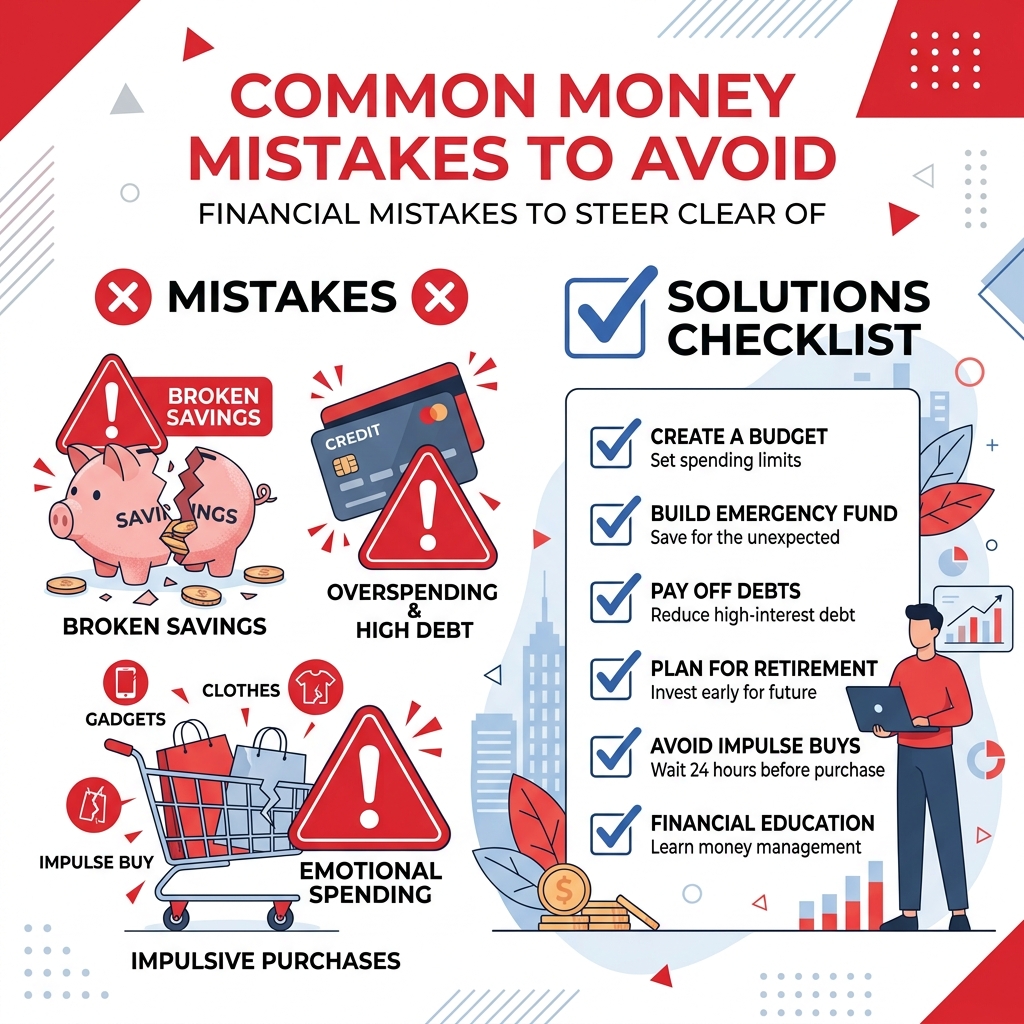
Why We All Make Money Mistakes
Money mistakes are universal. Regardless of income level, education, or background, virtually everyone makes financial errors at some point. The good news is that most money mistakes are predictable and preventable. By learning about the most common financial pitfalls, you can recognize them before they happen and develop strategies to avoid them.
Financial mistakes often stem from a lack of financial education, emotional decision-making, social pressure, or simply not paying attention. Our brains are not naturally wired for long-term financial thinking — we are programmed to seek immediate gratification, which often conflicts with sound financial planning.
Mistake 1: Not Having an Emergency Fund
Living without an emergency fund is like driving without insurance — everything is fine until it is not. Without a financial cushion, any unexpected expense — a medical bill, car repair, job loss, or home repair — becomes a crisis that often leads to high-interest debt.
The fix is straightforward: build an emergency fund of three to six months of essential living expenses. Start small — even $500 provides a buffer against minor emergencies. This single step eliminates the most common source of financial catastrophe for most people—read our emergency fund guide to start building your safety net.
Mistake 2: Spending Without a Plan
Without a budget or spending plan, money tends to disappear without a trace. You earn it, you spend it, and at the end of the month you wonder where it all went. This is not a minor oversight — it is the primary reason most people fail to build savings or make progress toward financial goals.
Create a simple budget that accounts for every dollar of income. It does not need to be complex — even a basic list of income, essential expenses, and a savings target is better than nothing. Track your spending weekly to stay on course—read our expense tracking guide to find out where your money is going.
Mistake 3: Carrying High-Interest Credit Card Debt
Credit cards are useful financial tools when used responsibly, but carrying balances at 18-25% interest rates is one of the most costly financial mistakes you can make. A $5,000 credit card balance at 20% interest, with minimum payments only, can take over 20 years to pay off and cost more in interest than the original purchase.
If you have credit card debt, make paying it off a top priority. Pay more than the minimum every month, consider balance transfer options for lower rates, and stop using the cards until they are paid off. Once you are debt-free, commit to paying your full balance every month.
Mistake 4: Lifestyle Inflation
As discussed in our article on financial habits, lifestyle inflation — increasing your spending every time your income increases — is a silent wealth killer. Many high-income earners live paycheck to paycheck because their lifestyle expanded to match (or exceed) every raise they received.
Combat lifestyle inflation by committing to save a significant portion of every raise or income increase. Enjoy some of the extra money, but direct most of it toward your financial goals. Your future self will be grateful for the restraint your present self shows.
Mistake 5: Ignoring Small Recurring Expenses
Small expenses feel harmless individually but compound into significant amounts over time. A $15 streaming service here, a $10 subscription there, a $5 daily coffee — these small leaks can drain thousands of dollars annually without you noticing.
Conduct a quarterly audit of all recurring charges on your accounts. Cancel anything you are not actively using or that does not provide clear value. Be ruthless — you can always resubscribe later if you genuinely miss a service. Many people discover hundreds of dollars in monthly savings from this exercise alone.
Mistake 6: Making Emotional Financial Decisions
Money and emotions are deeply intertwined. Stress shopping, keeping up with friends or neighbors, guilt spending, and fear-based financial paralysis are all examples of emotions driving financial decisions. These emotional reactions almost always lead to suboptimal outcomes.
Develop the habit of pausing before any significant financial decision. Sleep on large purchases. Discuss major financial choices with a trusted friend or family member. Create spending rules in advance — when you decide your values and priorities with a clear head, you make better decisions in emotional moments.
Mistake 7: Not Talking About Money
Money is often considered taboo, but avoiding financial conversations — especially with a partner or spouse — leads to misaligned priorities, hidden debt, and financial conflict. Open communication about money is essential for healthy financial management.
If you share finances with a partner, schedule regular money talks. Discuss your goals, concerns, spending habits, and financial plans openly. These conversations may feel uncomfortable at first, but they prevent far more painful surprises down the road.
Mistake 8: Procrastinating on Financial Planning
One of the costliest money mistakes is simply waiting too long to start managing your finances. Every year you delay building savings, paying off debt, or planning for the future is a year of potential progress lost. Time is an irreplaceable financial asset — once it is gone, no amount of money can buy it back.
The antidote to procrastination is action — even imperfect action. You do not need to have a perfect financial plan to start. Open a savings account today. Set up a small automatic transfer. Create a rough budget. Any step forward, no matter how small, is infinitely better than standing still.
How to Recover from Money Mistakes
If you have already made some of these mistakes, do not despair. Financial recovery is always possible. Start by acknowledging where you are, create a plan for where you want to be, and take consistent action toward that goal. Focus on what you can control going forward rather than dwelling on past mistakes.
Every financial success story includes chapters of mistakes and setbacks. What separates those who build wealth from those who do not is the willingness to learn from mistakes, adjust course, and keep moving forward. Your past does not determine your financial future — your present actions do.