Understanding Income: Where Your Money Comes From
Income is any money that flows into your life. It is the fuel that powers your entire financial engine. Without income, there is no budget to create, no savings to build, and no expenses to cover. Understanding your income — all sources of it — is the essential first step in personal finance.
Most people think of income only as their paycheck, but income can come from many sources. Earned income is money you receive from working — your salary, wages, tips, and bonuses. This is the most common form of income and typically the largest source for most people. Passive income comes from sources that do not require your active daily involvement, such as rental properties, royalties, or income from a business you own but do not actively manage.
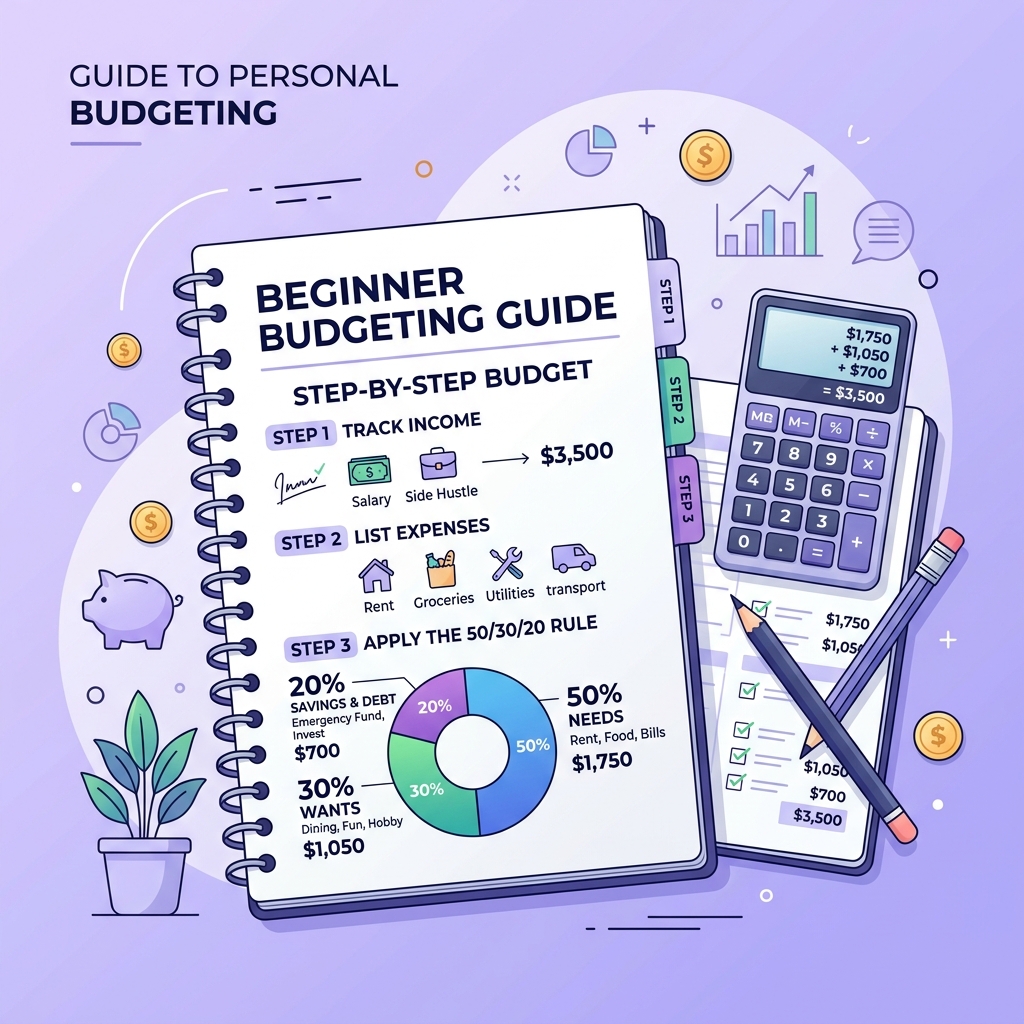
The most important income number for budgeting purposes is your net income — the amount you actually take home after taxes, insurance premiums, retirement contributions, and other payroll deductions. This is the real money you have available to manage—read our money management guide for a broader overview of how to spend and save wisely.
Understanding Expenses: Where Your Money Goes
Expenses are everything you spend money on. They represent the outflow of money from your life. Expenses come in several forms, and understanding these categories is crucial for managing your finances effectively.
Fixed expenses are costs that remain relatively constant each month. Rent or mortgage payments, car loans, insurance premiums, and subscription services are common fixed expenses. These are predictable, which makes them easy to plan for in your budget.
Variable expenses fluctuate from month to month. Groceries, utilities, gasoline, dining out, and entertainment costs change based on your behavior and circumstances. These expenses offer the most opportunity for savings because they are within your control to adjust.
Periodic expenses do not occur every month but are still necessary. Annual insurance premiums, vehicle registration, holiday gifts, medical co-pays, and home repairs fall into this category. Many people forget to plan for these, leading to budget surprises and unplanned debt.
Discretionary expenses are things you want but do not need. Dining at restaurants, entertainment, hobbies, vacations, and luxury purchases are discretionary. These are the first place to look when you need to free up money for savings or debt repayment.
The Golden Rule: Income Must Exceed Expenses
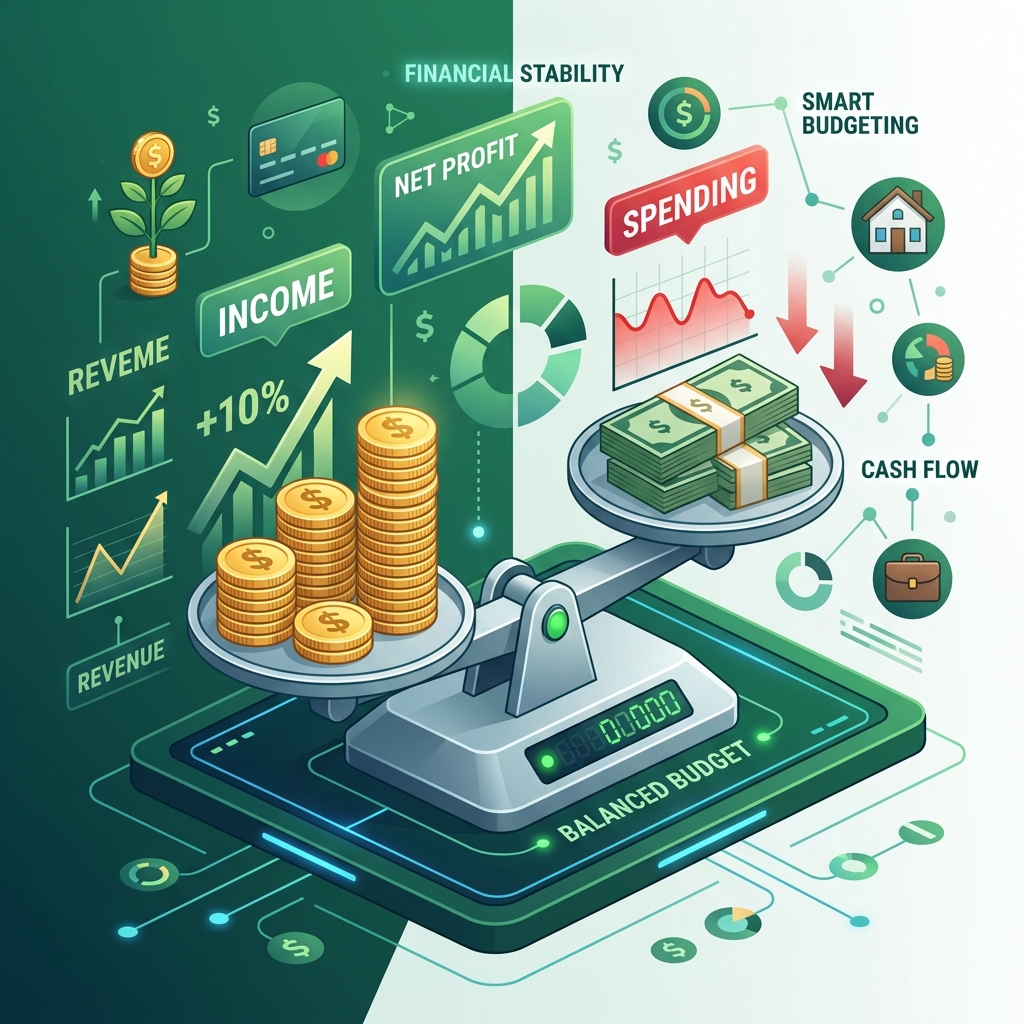
The most fundamental principle of personal finance is simple: you must spend less than you earn. When your income exceeds your expenses, the surplus becomes savings, investment capital, or debt repayment power. When your expenses exceed your income, you are either depleting savings or going into debt — both of which are unsustainable paths.
This seems obvious, yet millions of people consistently spend more than they earn. Credit cards make it deceptively easy to live beyond your means because the pain of payment is delayed. But eventually, the math catches up. The gap between income and expenses — in either direction — compounds over time. A small monthly surplus builds wealth; a small monthly deficit builds debt—read our budgeting guide to learn how to keep your spending in check.
How to Calculate Your Financial Gap
Calculating the gap between your income and expenses is straightforward but powerful. Take your total monthly net income and subtract your total monthly expenses. The result tells you everything about your financial trajectory.
If the result is positive, you are living within your means. The question becomes: is the surplus large enough to meet your goals? Are you saving enough for emergencies, retirement, and the things you want in life?
If the result is zero, you are living paycheck to paycheck. You have no margin for error — one unexpected expense could push you into debt. Your priority should be creating even a small surplus by reducing expenses or increasing income.
If the result is negative, you are spending more than you earn. This is a financial emergency that requires immediate action. You need to cut expenses, increase income, or both to stop the bleeding and begin building toward stability.
Strategies to Improve Your Income-to-Expense Ratio
Reducing Expenses
Start with your largest expenses because even small percentage reductions yield meaningful dollar savings. Review your housing costs, transportation expenses, and food spending first. Then work through smaller categories looking for waste, unused subscriptions, and opportunities to negotiate better rates.
Increasing Income
While cutting expenses is important, there is a limit to how much you can cut. There is no limit to how much you can earn. Consider asking for a raise, developing new skills to increase your value, starting a side business, or taking on freelance work. Even a few hundred dollars of additional monthly income can dramatically improve your financial picture.
Optimizing Both Simultaneously
The most powerful approach is to work on both sides of the equation simultaneously. Reduce unnecessary expenses while finding ways to earn more. This creates a widening gap between income and expenses, accelerating your progress toward any financial goal.
Tracking Income vs Expenses Over Time
A single month's snapshot is useful, but the real power comes from tracking your income and expenses over time. Create a simple spreadsheet or use a budgeting app to record your monthly totals. Over three, six, and twelve months, patterns emerge that you cannot see in a single month's data.
You might discover that certain months consistently have higher expenses (holidays, back-to-school, summer vacations). This knowledge allows you to plan ahead by saving extra in lower-expense months to cover higher-expense periods. You might also notice spending trends — slowly increasing restaurant spending, for example — that you can address before they become problems.
The Relationship Between Income, Expenses, and Wealth
Wealth is not determined by income alone. It is determined by the gap between income and expenses, maintained consistently over time. A person earning $50,000 per year who saves $10,000 annually will build more wealth than a person earning $150,000 who spends every penny. This is why understanding and managing the income-expense relationship is more important than chasing a higher salary.
Every dollar of income that does not go to expenses becomes a building block for your financial future. Whether that dollar goes to an emergency fund, a retirement account, or paying off debt, it is working for you rather than disappearing into consumption. Master the balance between income and expenses, and you master your financial life.