What Is a Budget and Why Do You Need One?
A budget is simply a plan for how you will spend your money. It tells every dollar where to go before the month begins, ensuring your spending aligns with your priorities and goals. Without a budget, it is incredibly easy to overspend in some areas while neglecting others, leaving you with little to no savings at the end of the month.
Budgeting is not about deprivation. It is about empowerment. When you have a budget, you give yourself permission to spend on things you value while cutting waste from areas that do not matter to you. A good budget reduces financial stress, eliminates guilt about spending, and puts you firmly in control of your financial life.
Step 1: Calculate Your Monthly Income
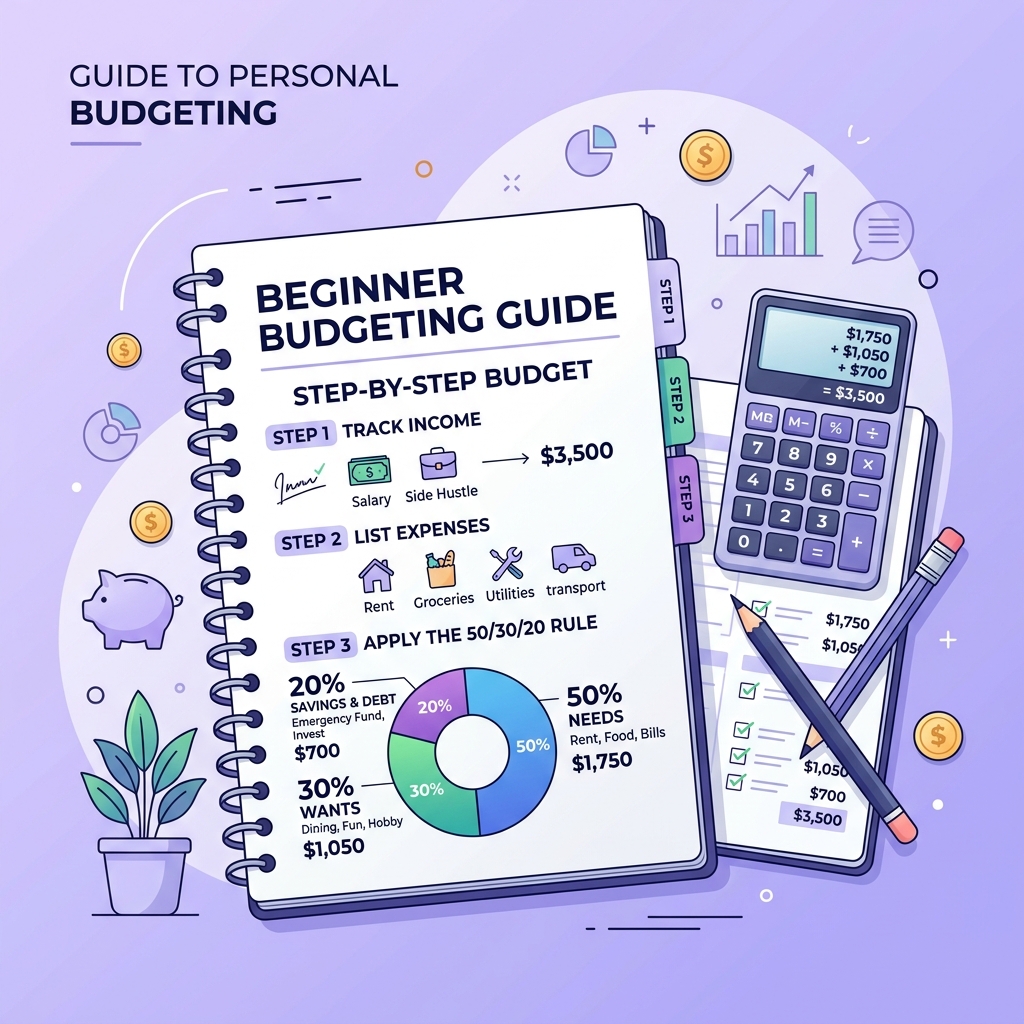
The first step in creating a budget is knowing exactly how much money you have to work with. Calculate your total monthly net income — this is the amount you actually receive after taxes, insurance premiums, and other payroll deductions. If you have a regular salary, this is straightforward. If your income varies (freelance, commission, gig work), calculate your average monthly income over the past six months, or use your lowest recent month as a conservative baseline.
Include all sources of income: your primary job, side hustles, freelance work, regular gifts, child support, or any other consistent money coming in. The key word is consistent — do not count one-time windfalls or uncertain income sources.
Step 2: List All Your Expenses
Next, list every expense you have. Start with fixed expenses that stay the same each month: rent or mortgage, car payment, insurance premiums, loan payments, and subscriptions. These are predictable and easy to plan for.
Then add variable expenses that change month to month: groceries, utilities, gasoline, dining out, entertainment, clothing, and personal care. Look through your bank statements and credit card bills from the past three months to get accurate numbers. Do not guess — use real data.
Finally, account for periodic expenses that do not occur monthly but still need to be planned for: annual insurance premiums, vehicle registration, holiday gifts, back-to-school supplies, and home maintenance. Divide these annual costs by 12 and include the monthly amount in your budget.
Step 3: Categorize Your Spending
Organize your expenses into meaningful categories. A simple category structure might include:
- Housing: Rent/mortgage, property taxes, home insurance, maintenance
- Transportation: Car payment, gas, insurance, maintenance, public transit
- Food: Groceries, dining out, coffee shops
- Utilities: Electric, gas, water, internet, phone
- Insurance: Health, life, disability (if not payroll-deducted)
- Debt Payments: Credit cards, student loans, personal loans
- Savings: Emergency fund, retirement, specific goals
- Personal: Clothing, haircuts, gym, subscriptions
- Entertainment: Movies, hobbies, events, streaming services
- Giving: Charitable donations, gifts
Step 4: Choose a Budgeting Method
The 50/30/20 Method
This popular approach divides your after-tax income into three categories: 50% for needs, 30% for wants, and 20% for savings and debt repayment. It is simple, flexible, and works well for beginners who want a framework without too much detail.
Zero-Based Budgeting
With zero-based budgeting, you assign every single dollar of income to a specific category until your income minus your expenses equals zero. This does not mean you spend everything — savings is a category too. This method is highly effective because it eliminates the "I have money left over, so I can spend it" mentality.
Envelope Method
The envelope method uses cash for variable spending categories. You label envelopes for categories like groceries, dining out, and entertainment, then fill each with the budgeted cash amount at the start of the month. When an envelope is empty, you stop spending in that category. This method is excellent for people who struggle with overspending because the physical limitation of cash makes budgets tangible.
Step 5: Set Up Your Budget
Now it is time to put your budget on paper (or screen). You can use a simple spreadsheet, a notebook, or a budgeting app. Write your monthly income at the top, then list each expense category with the amount you plan to spend. Your total planned expenses (including savings) should not exceed your income.
If your expenses exceed your income, you need to make adjustments. Start by looking at wants and discretionary spending. Can you reduce dining out? Cancel a subscription? Find a cheaper phone plan? Make cuts where they will hurt least, prioritizing your needs and savings goals.
Step 6: Track Your Spending Throughout the Month
A budget only works if you track your actual spending against your plan. At least once a week, review your spending and compare it to your budgeted amounts. This helps you catch overspending early and make adjustments before the month is over.
Many people find it helpful to track daily expenses — it only takes a couple of minutes. Record every purchase, whether you use an app, a spreadsheet, or simply write it down—read our expense tracking guide to learn how to record every dollar accurately.
Step 7: Review and Adjust Monthly
At the end of each month, review your budget. Compare your planned spending to your actual spending in each category. Where did you overspend? Where did you underspend? What surprised you? Use these insights to create a more accurate and effective budget for the next month.
Your budget is a living document that should evolve with your life. As your income changes, your expenses shift, and your goals evolve, your budget should adapt accordingly. The goal is continuous improvement, not perfection from day one.
Common Budgeting Mistakes to Avoid
- Making it too restrictive: A budget that leaves no room for enjoyment is a budget you will abandon. Include some fun money.
- Forgetting irregular expenses: Annual subscriptions, car registration, and seasonal costs can derail your budget if unplanned.
- Not tracking consistently: A budget you do not track is just a wish list. Commit to regular tracking.
- Giving up after one bad month: Everyone overspends sometimes. A bad month is not failure — it is data for improvement.
- Being too vague: "Spend less" is not a plan. Specific dollar amounts for specific categories create accountability.
Your First Month Budgeting: What to Expect
Your first budget will not be perfect — and that is completely fine. The first month is about learning, not about hitting every number exactly. You will likely discover expenses you forgot to include, underestimate certain categories, and feel uncomfortable with the structure. All of this is normal.
By your third month of budgeting, you will have a much more accurate picture of your spending patterns and a budget that feels realistic and manageable. By your sixth month, budgeting will feel natural. By your first year, you will wonder how you ever lived without one.
The key is to start today. Grab a piece of paper, open a spreadsheet, or download a budgeting app. Calculate your income, list your expenses, and create your first budget. It does not need to be perfect — it just needs to exist. You can refine it as you go.