Why You Need a Monthly Budget Plan
A monthly budget plan is your financial blueprint. It tells your money where to go instead of wondering where it went. Without a plan, spending happens reactively — you pay bills as they come, buy things as you want them, and hope there is something left at the end of the month. With a budget plan, you take control. Every dollar is assigned a purpose before the month begins.
Creating a monthly budget does not have to be complicated. In fact, the simpler your budget, the more likely you are to stick with it. This guide walks you through the steps—read our beginner guide to budgeting for a practical, effective plan that you can start using immediately.
Gather Your Financial Information
Before you can create a budget, you need accurate financial data. Gather the following: your most recent pay stubs or income statements, bank statements from the last three months, credit card statements, a list of all recurring bills and subscriptions, and records of any other regular expenses like childcare, loan payments, or insurance premiums.
Having three months of data allows you to calculate accurate averages for variable expenses like groceries, utilities, and gas. Single-month snapshots can be misleading because spending fluctuates month to month.
Step 1: Determine Your Total Monthly Income
Write down every source of income you receive each month. For most people, this is primarily their paycheck, but include all sources: salary or wages, freelance or side hustle income, regular bonuses or commissions, child support or alimony received, and any other regular income.
Use your net income — the amount deposited into your bank account after all deductions. This is the real money you have available to budget. If your income varies, use the average of the last three to six months, or use your lowest recent month for a conservative budget that works even in lean times.
Step 2: List and Categorize All Expenses
Create a comprehensive list of every expense, organized by category. Start with essential fixed expenses that rarely change: housing (rent or mortgage), insurance premiums, loan payments, and minimum debt payments. These form the non-negotiable foundation of your budget.
Next, list essential variable expenses: groceries, utilities, transportation costs, and medical expenses. These fluctuate but are necessary. Use your three-month average for each category.
Then list discretionary expenses: dining out, entertainment, shopping, hobbies, subscriptions, and personal care. These are the areas with the most flexibility for adjustment.
Finally, do not forget periodic expenses. Divide annual costs (car registration, holiday gifts, annual subscriptions) by 12 and include the monthly amount. This prevents these expenses from ambushing your budget when they come due.
Step 3: Apply a Budgeting Framework
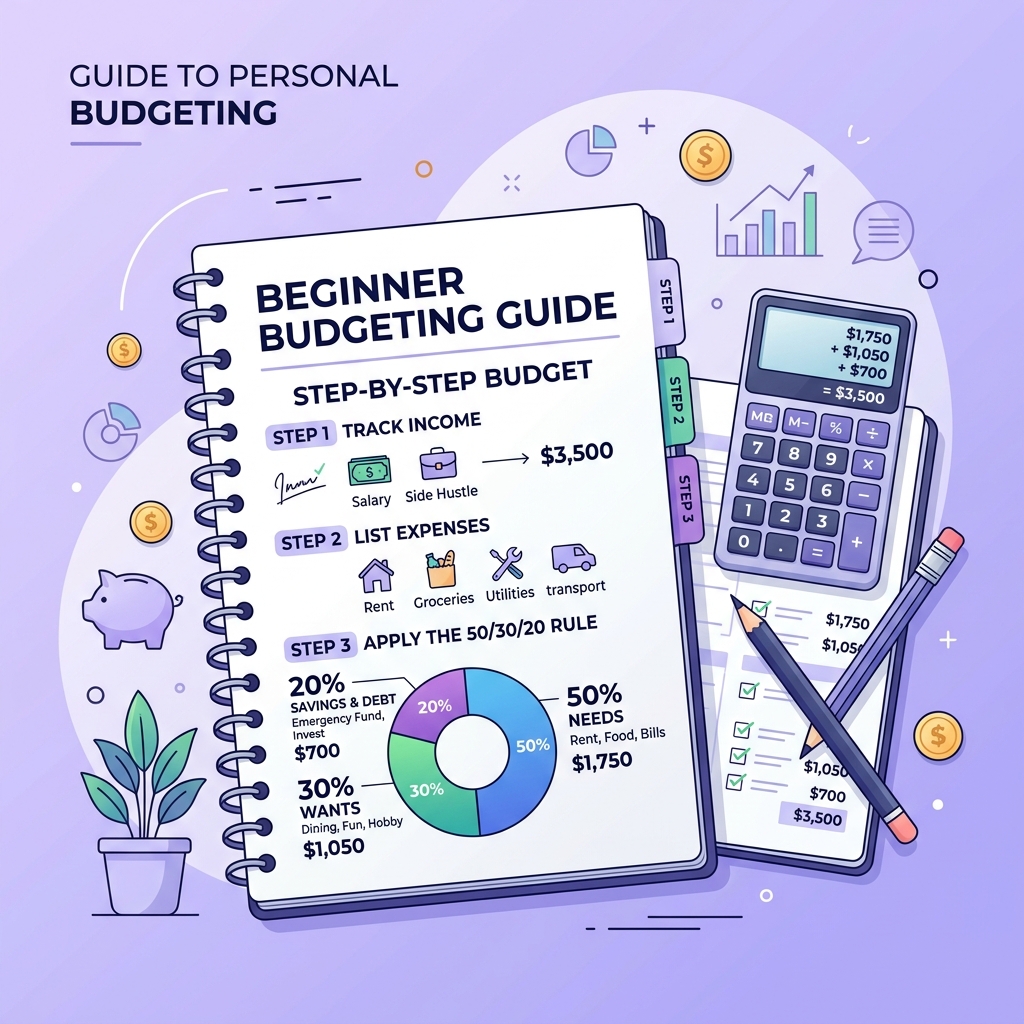
With your income and expenses listed, apply a framework to organize your budget. The 50/30/20 rule is an excellent starting point: allocate 50% of net income to needs, 30% to wants, and 20% to savings and debt repayment beyond minimums.
Compare your actual spending to these targets. If your needs exceed 50% of income (common in high-cost-of-living areas), you may need to adjust the ratios — perhaps 60/20/20 or 55/25/20. The specific percentages matter less than having a structure that accounts for all three categories.
Step 4: Assign Dollar Amounts to Each Category
Now assign specific dollar amounts to each spending category. Start with your non-negotiable needs, then allocate savings (pay yourself first), then distribute remaining funds to wants categories. The total of all categories should equal your total net income — no more, no less.
If your planned expenses exceed your income, you need to make cuts. Start with wants and work backward toward needs. Look for expenses you can reduce, eliminate, or defer. If you still cannot balance the budget after cutting discretionary spending, consider ways to increase income.
Step 5: Build in Buffer and Flexibility
No budget survives the month perfectly. Build in a small miscellaneous or buffer category — typically 2-5% of income — for unexpected small expenses. This prevents minor surprises from derailing your entire budget and reduces the frustration of being slightly over in various categories.
Also, recognize that some months have unusual expenses. Birthday gifts, car maintenance, medical visits, and seasonal costs are normal parts of life. Your budget should anticipate these rather than treating them as emergencies every time they occur.
Step 6: Implement and Track
Put your budget into action on the first day of the month. Set up any automatic transfers for savings, make note of upcoming bill due dates, and begin tracking your spending daily. Use whatever tracking method works best for you — a spreadsheet, a budgeting app, a notebook, or even a simple notes app on your phone.
Check in on your budget at least weekly. Compare your actual spending to your budgeted amounts in each category. If you are trending over in a category, adjust your behavior for the rest of the month. If you are under in a category, decide whether to reallocate the surplus or let it add to your savings.
Step 7: Review, Learn, and Adjust
At the end of the month, conduct a thorough review. Where did you overspend? Where did you underspend? Were your budgeted amounts realistic? What expenses did you forget to include? Use these insights to improve next month's budget.
Your budget should get more accurate and effective with each passing month. By the third month, you will have a realistic, functional budget that reflects your actual spending patterns. By the sixth month, budgeting will feel natural and even empowering.
Tips for Sticking to Your Monthly Budget
- Make it visual: Use charts, graphs, or color-coded spreadsheets to make your budget engaging and easy to understand at a glance.
- Include fun money: Budget a specific amount for guilt-free spending. This prevents the feeling of deprivation that causes people to abandon budgets.
- Use cash for trouble categories: If you consistently overspend on dining out or entertainment, switch to cash for those categories.
- Plan for irregular expenses: Create sinking funds for known future expenses so they do not surprise you.
- Be patient with yourself: Budgeting is a skill that improves with practice. Do not give up after a difficult month.
A monthly budget plan is not a restrictive cage — it is a tool for financial freedom. When every dollar has a purpose, you spend less on things that do not matter and more on things that do. Start your budget today and take the first step toward financial control.